
On this page
North Saanich Climate Action Initiatives
North Saanich has a long commitment to taking action on climate including:
- Signing the Climate Action Charter committing to:
- Becoming carbon neutral in corporate operations by 2012
- Measuring and reporting community greenhouse gas (GHG) emissions
- Creating complete, compact, more energy efficient communities (e.g., where walking, cycling and transit are the preferred modes, and energy use in buildings is reduced)
- Committing to reducing its community-wide GHGs from 2007 levels:
- 8.5% by 2015
- 25% by 2020
- 45% by 2040.
According to the CRD's Regional GHG Inventory work, the District's community emissions totalled 65,819 tonnes in 2007, with transportation for 54% of the overall emissions. In 2024, the total GHG emissions were 63,971 tonnes, only 3% below 2007 levels.
North Saanich continues to show its commitment to climate action through its Official Community Plan, which incorporates the Donut Economics sustainability framework, and its Strategic Plan which commits to developing a Climate Action Plan.
Climate action involves both reducing GHG emissions (mitigation) and strengthening North Saanich's resilience to the growing impacts of climate change through adaptation strategies.
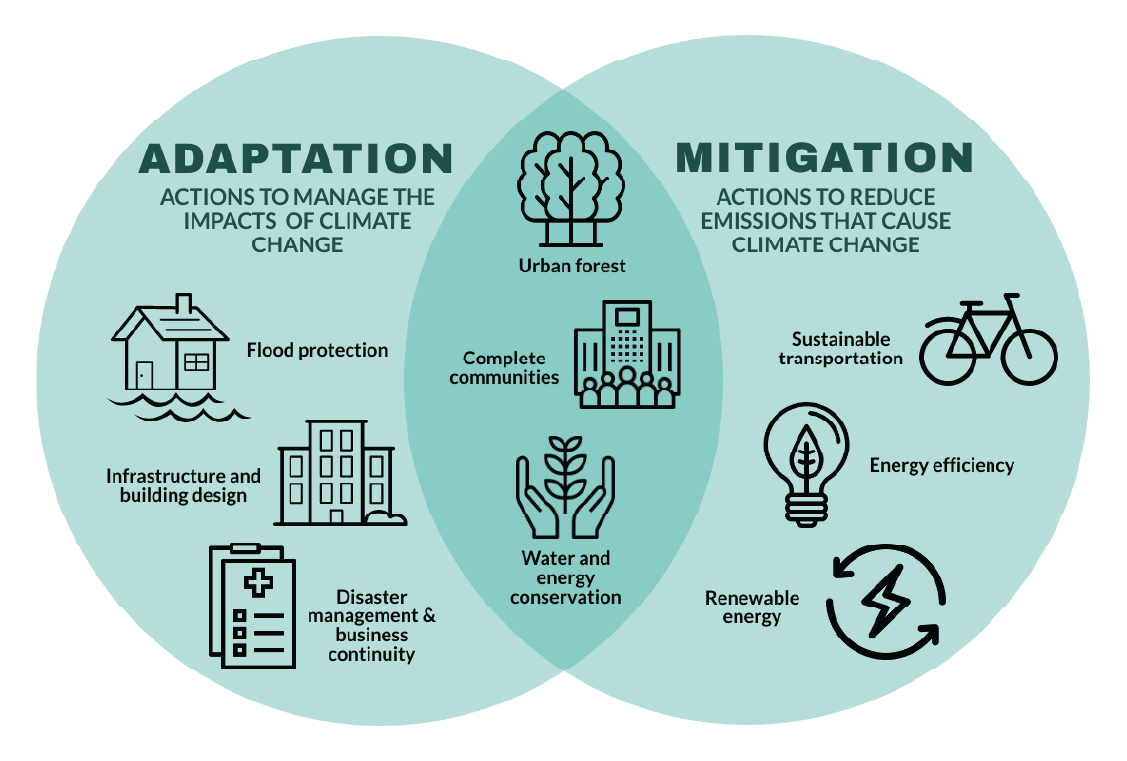
Above: Overlap and Differences between Adaptation and Mitigation (Image credit: ICLEI Canada, 2019)
Corporate (Municipality's own) GHG Emission Reduction Initiatives
Corporate Transportation
To mitigate its environmental impact, the District has replaced three aging fleet vehicles with electric vehicles. Level 1 electric vehicle charging stations have been installed at the Municipal Hall for staff use, as well as two Level 2 chargers to support the three EVs in the municipal fleet.
Corporate Buildings
The Municipal Hall has energy saving and sustainability features including:
- VRF (Variable refrigerant flow) HVAC systems and ductless HVAC/system with separate space control;
- LED lighting; Motion sensor lighting;
- Low VOC finishes, and low VOC paints and carpeting
- Low Flow plumbing fixtures;
- Solar PV (40 panels installed in 2017 producing approximately 15,000 kWh a year -equivalent to 1.5 homes - and now being net metered);
- Electric car charging stations (see above for more info).
The District has been purchasing renewable natural gas for its operations since February 2025.
Shared Corporate Energy Manager
The District has been selected to participate in a two-year Shared Corporate Energy Manager Services Pilot Program. This program will help the District understand its facilities' energy and GHG emissions and prioritize actions that result in energy, GHG, and cost savings, with climate resilience and health co-benefits. It also provides the District with tailored support for implementing projects and accessing incentives, rebates, and training.
Community-Wide GHG Emission Reduction Initiatives
Transportation
- The District has an Active Transportation Plan and is implementing traffic calming measures, speed limit reductions, and connectivity improvements throughout the district.
- The OCP prioritizes growth in areas within close proximity to public transit to help reduce reliance on personal vehicles.
- The District has a level 2 charger at the Municipal Hall, for use by the public, free of charge.
Buildings
- BC Energy Step Code in North Saanich - In the fall of 2018 Council adopted an amendment to the District's building bylaw which introduced the implementation of the Provincial Energy Step Code Regulations. More information can be found on our BC Energy Step Code webpage.
- Greater Victoria 2030 District - GV2030 District is a public-private-non-profit collaboration with the goal of reducing the environmental impacts of building construction and operations in commercial buildings. North Saanich became a sponsor of the program in May 2025, meaning commercial building owners/businesses in the District can pledge their buildings and access membership benefits such as performance tracking, Energy Star Portfolio Manager, Building Benchmark BC, a peer network, access to specialists, purchasing pools to reduce retrofit costs, and access to tools, training, and programs.
- Home Energy Workshops - North Saanich partnered with The District of Central Saanich to host two Home Energy Workshops designed to educate residents about retrofit strategies and the role of energy audits in making informed, cost-effective, and climate-conscious decisions. Stay tuned for future workshops by subscribing to our newsletter.
Waste
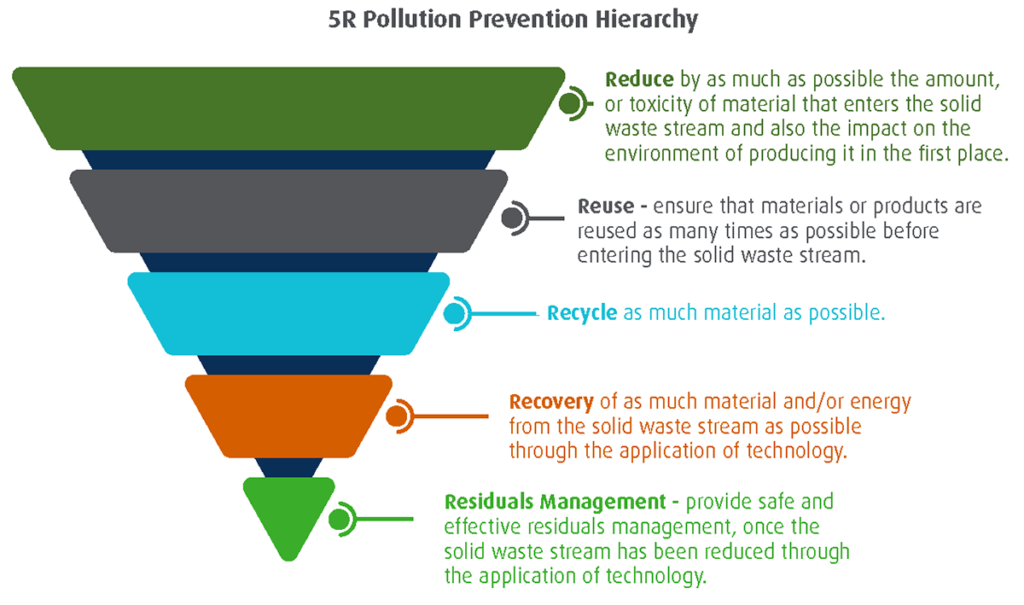
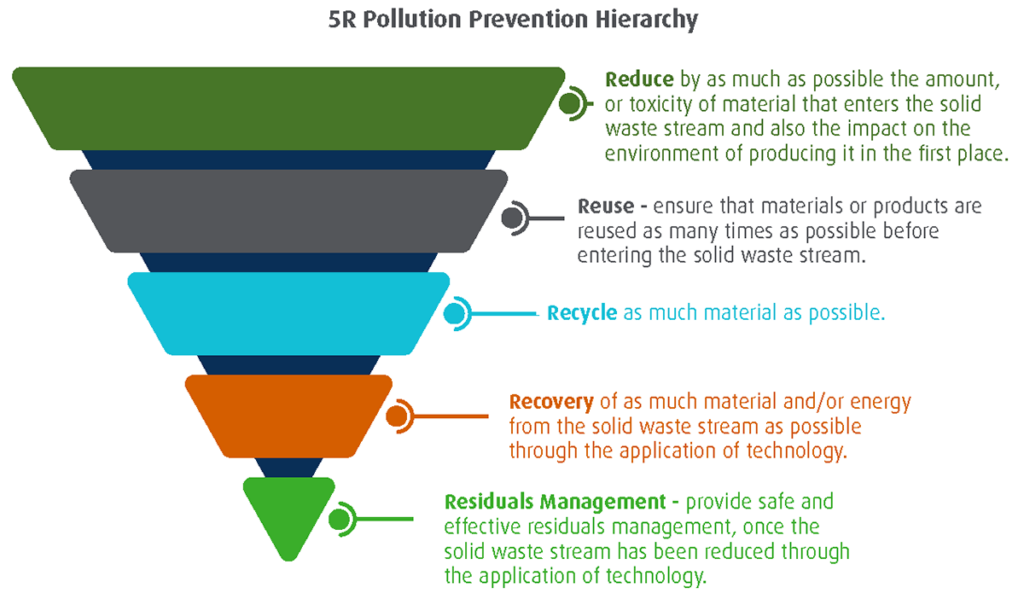
Check out the Capital Regional District Reducing Waste page for pollution prevention tips and for information about their Rethinking Waste Grants.
Composting and recycling are a great way to divert the waste we create. The Compost Education Centre offer workshops and other resources to help you get started or answer any questions you may have about compost. Are you wondering if you can recycle a specific item? Use the CRD What Goes Where tool to find out.
Natural Asset Inventory
The District is currently working with the Natural Assets Initiative group to understand the natural assets we have, their condition, risks, and the extent that we rely on them. This work will enable us to identify their monetary value, model, and monitor them in order to protect and restore their ecological function. This is a precursor to future work to create a District Natural Asset plan and other work to support ecosystem restoration.
Monitoring and Reporting
Purple Air Monitors
The District has installed air quality monitoring systems located at three key sites in North Saanich: the Municipal Hall, McTavish Fire Hall, and Wain Road Fire Hall. These systems are designed to measure and track airborne particulate matter (PM), with a focus on PM2.5 due to its associated health risks. Read more about Air Quality Sensors at the District.
Local Government Climate Action Program
The Local Government Climate Action Program (LGCAP) provides predictable, long-term funding for communities to achieve shared climate goals for a sustainable B.C. The program supports B.C. communities through capacity building and investments to reduce greenhouse gas emissions and adapt to climate impacts by providing annual funding to signatories of the Climate Action Charter and Modern Treaty Nations.
- 2024 Local Government Climate Action Program Survey and Attestation Form
- 2023 Local Government Climate Action Program Survey and Attestation Form (note this linked document reads 2024 but is the 2023 report)
Provincial Climate Action Reporting Incentive Program Reports (this program has now been replaced with the LGCAP)
- 2019 CARIP Report
- 2018 CARIP Report - awarded 'Accelerating Program on Climate Action Charter Commitments'
- 2017 CARIP Report - awarded 'Accelerating Program on Climate Action Charter Commitments'
Climate Rebates & Programs
Transportation
- CleanBC GoElectric Program - Provincial rebates for EVs
- Go By Bike Week in the CRD and other Capital Bike events and route maps
- BC Bike Friendly Business Directory
- School Commute Planning | Capital Regional District - CRD's Ready Step Roll Program
Buildings - Homes
- CleanBC Better Homes Program - While North Saanich no longer offers heat pump top ups since the Provincial program ended on April 11, 2025, North Saanich homeowners may be eligible to receive rebates to save energy and reduce greenhouse gas emissions in their homes from offerings under the province's CleanBC Better Homes and Home Renovation Rebate Program. Check out their Rebate Search Tool.
- Home Energy Navigator - The Home Energy Navigator Program, offered by the Capital Regional District, is a free program created to support homeowners with their retrofits. Participants are connected with an Energy Concierge who provides expert advice and guidance.
- BC Hydro Residential Rebates and Programs - BC Hydro offers rebates for home renovations and energy efficient products and solar panels.
- Fortis BC - Fortis BC also offers rebates and tips for space and water heating upgrades, insulation, appliances and more.
- Community Energy Association - CEA offers informative webinars and guides on energy efficient retrofits and other building resources.
- Other Provincial Building Energy Incentives